Posts

"My faith was broken ..."

Last week the National Public Radio program "All Things Considered" mentioned one of the distant intentionality studies that my colleagues and I published last year. The study showed that in emotionally bonded couples where one was healthy and the other was being treated for cancer, that when the healthy partner sent compassionate intention thoughts towards their loved one, then the physiological state of the patient, who was isolated at a distance, responded. This is one of a few dozen similar studies conducted over the past few decades. Cumulatively they show repeatable evidence that we are connected in spooky ways that resemble on a macro scale what quantum entanglement is on the micro scale. [These studies were not designed to test whether that connection affects healing.] It was predictable that some people would not like the NPR program. One of those comments appeared today in the Huffington Post by someone who was clearly miffed by the very concept that thoughts might...

Superpowers Symposium 2009

Image
Chris Knowles provides an excellent summary of a symposium on "superpowers" I attended at Esalen Institute in Big Sur last week. I am used to attending scientific conferences, which are often heavy on details, data and statistics. By contrast, this meeting was heavy on the humanities and light on science, a challenging but very refreshing change for me.  My talk was entitled "Reality 3.3," in which I attempted to show how our models of common sense have evolved over time. I identified 3 major shifts in historical worldviews, and I speculated about a 4th (Reality 4.0) that is almost on the horizon. The most startling part of the meeting for me was when Jacques Vallee spoke in detail about a UFO flap in Brazil. I hadn't realized the extent to which the Brazilian military was involved in studying that case, which persisted for three months, or the strength of the evidence, some of which is still classified.  

The Mystical Roots of Science Fiction

Here is a teaser of an audio clip interview with Jeff Kripal, author of the upcoming Authors of the Impossible (due out in early 2010). I've read an advance copy of that book, and I think his take on why people have always been drawn towards the paranormal is exactly right. As the blurb about his book says on the EnlightenNext website: [It's] about the relationship between mysticism, pop culture, and the paranormal. Weaving together an interesting combination of sources--from Philip K. Dick to the human potential movement to the UFOlogy of French astronomer Jacques Valle—he describes why he thinks that our general cultural obsession with science fiction, as seen in the popularity of TV shows like Heroes and movies like The X-Men , is a modern expression of the same spiritual impulse toward the “supernormal” that lies at the heart of all religious traditions. But as Kripal points out, these new sci-fi mythologies are distinct from the traditions in that they are oriented to...

Mind, body, environment

Bruce Lipton, on epigenetics.

Two recommended books

Image
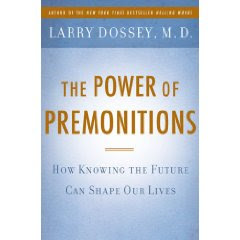
This is Dr. Larry Dossey's new book on premonitions, ranging from anecdotes to scientific evidence to possible meaning and value. Written in Dossey's crystal clear style, and saturated with endnotes and references, this is an excellent overview of what we currently know about the mind-bending experience of knowing the future before it arrives. I advise caution when thinking about retrocausation, because if you try to figure it out it will make your brain hurt. Fortunately, this book goes a long way towards relieving that particular pain. About 30 years ago, when I first became seriously interested in parapsychology, Charles Tart was one of a handful of scientists I approached who provided me with some encouragement. Most of my other colleagues and elders at the time suggested it would be better to do something else. Anything else. But Charley's approach to parapsychology, the clever experiments he conducted, and the way he framed the broader context of this topic (which evo...

IONS 2009 Conference

Image
Institute of Noetic Sciences conference, June 17-21, Tucson, Arizona This is IONS' biennial conference. I will be giving a presentation on advances in psi research, including preliminary results of my recent experiments involving the effects of consciousness on a double-slit optical system, a workshop with Dr. Julie Beischel on the evidence for survival of bodily death, which is planned to include a demonstration session with a research medium , and an evening experiment in collective awareness and intuition.

Superstitions of modern science

Two examples of unquestioned adherence to the 17th century mechanistic assumptions underlying the supposedly modern brain sciences. From Time magazine, " why we're superstitious ," in which superstitions are reduced entirely to quirks of brain functioning. And from Newsweek , more on the same , both referring to a book entitled Supersense. My problem with such efforts is not with the neuroscience, which is undeniably interesting. Rather, I'm worried that the authors of these books, and the journalists who write the articles, haven't bothered to do their homework. For example, the author of Supersense says in response to the question, "What are some examples of things that people believe science will one day explain?" Telepathy, precognition, anything that involves the mind. Typically they will think that humans have this untapped potential for connecting with each other over large distances, which would violate the current laws of physics as we curre...